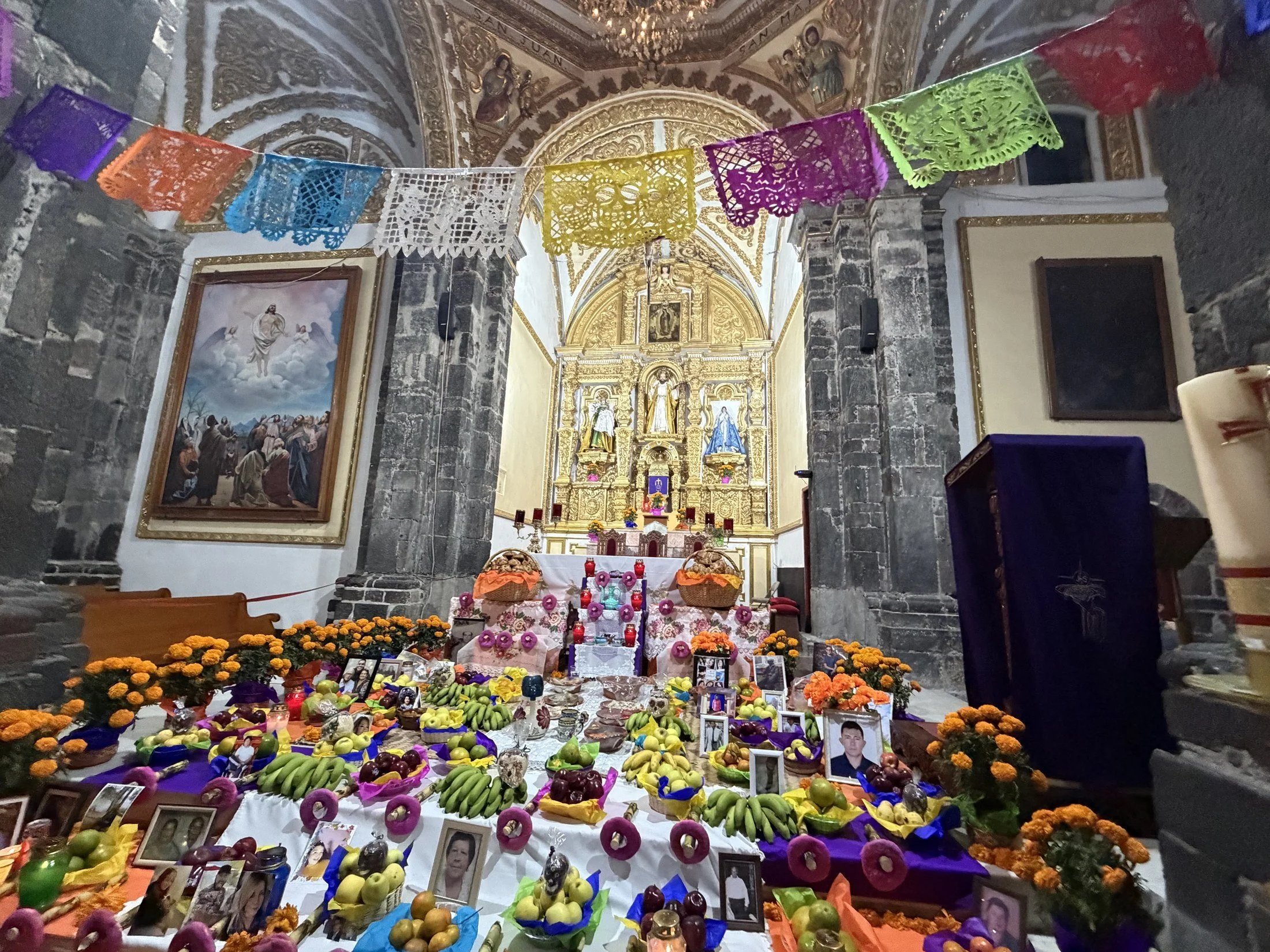
The church ofrenda in Mixquic, beneath papel picado and a golden altarpiece.
For our final day in Mexico City, we had planned something special: a private guided tour exploring the canals of Xochimilco before visiting two cemeteries to experience Día de Muertos traditions.
We started the afternoon with our guides, Ari and Noe, aboard a colorful trajinera that took us through Xochimilco's historic canals, part of a UNESCO World Heritage Site.
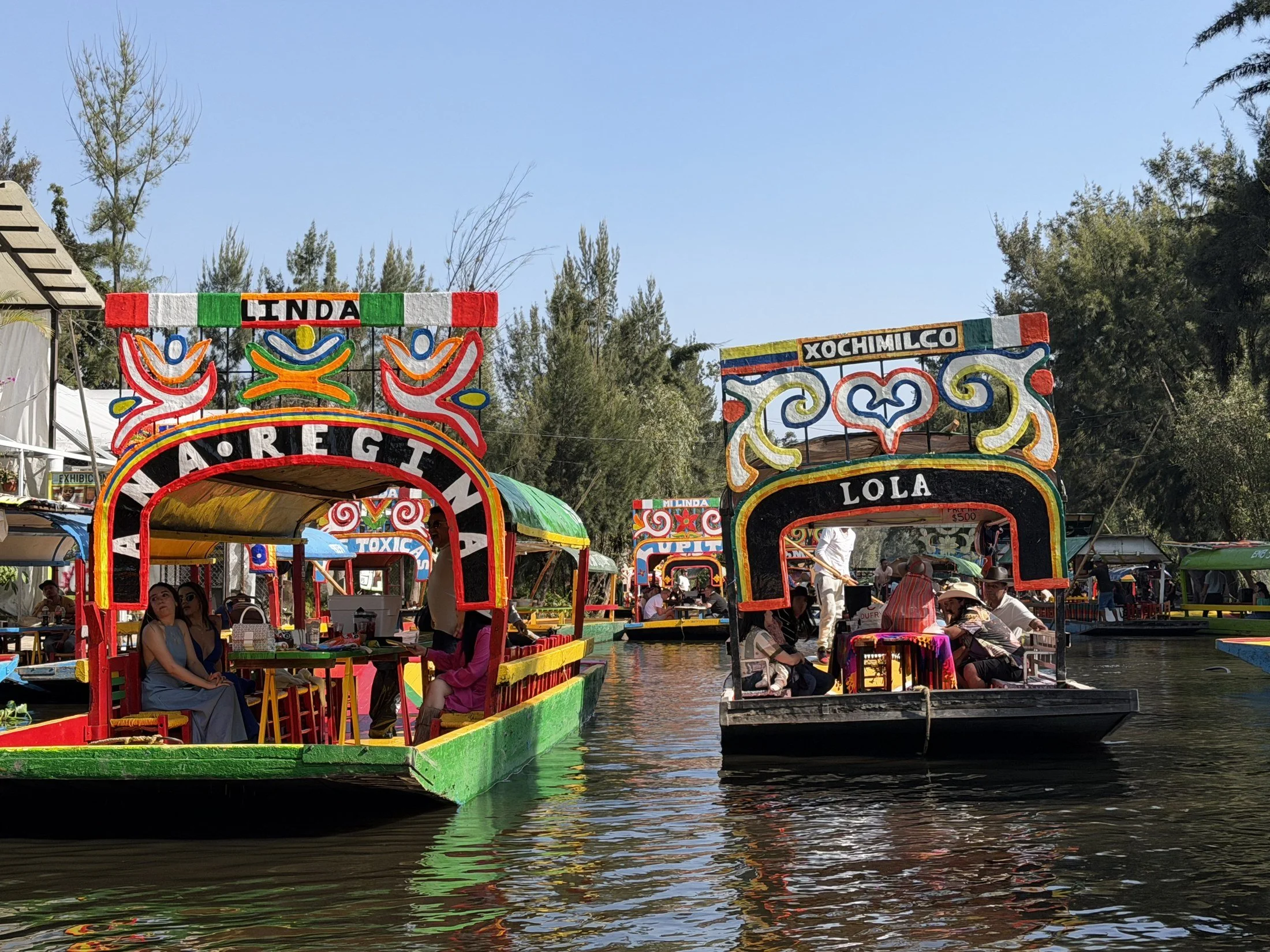
An afternoon on the colorful canals of Xochimilco.
The tour included a mezcal tasting, and as someone who's loved mezcal for years, I was excited to learn more about how it's made and explore the differences between varieties. Ari walked us through several selections, most of them from Oaxaca, including a special Día de Muertos preparation made only during the holiday. It had strong notes of cinnamon that immediately reminded me of Christmas. My favorite was the Chango Marango Madrecuishe, while Brandon preferred the Espadín.
The canals were especially busy that day. Music blasted from passing boats; some had mariachis singing, while others had couples dancing. Occasionally, boats bumped into one another with a friendly love tap. The atmosphere was vibrant and festive, and I could see why this would be such a fun experience for groups. We had a wonderful time with our guides, too. Brandon even joined Ari for a Cuban cigar as we continued along the canals.
We passed the time chatting about the town, music, and Mexican folklore, including the legend of La Llorona. I was familiar with the darker version, in which a woman drowns her own children and wanders near bodies of water searching for them. According to the legend, her cries can still be heard at night near rivers and canals throughout Mexico, including those of Xochimilco. Every year around Día de Muertos, the legend is brought to life through theatrical performances along the canals with music and costumes.
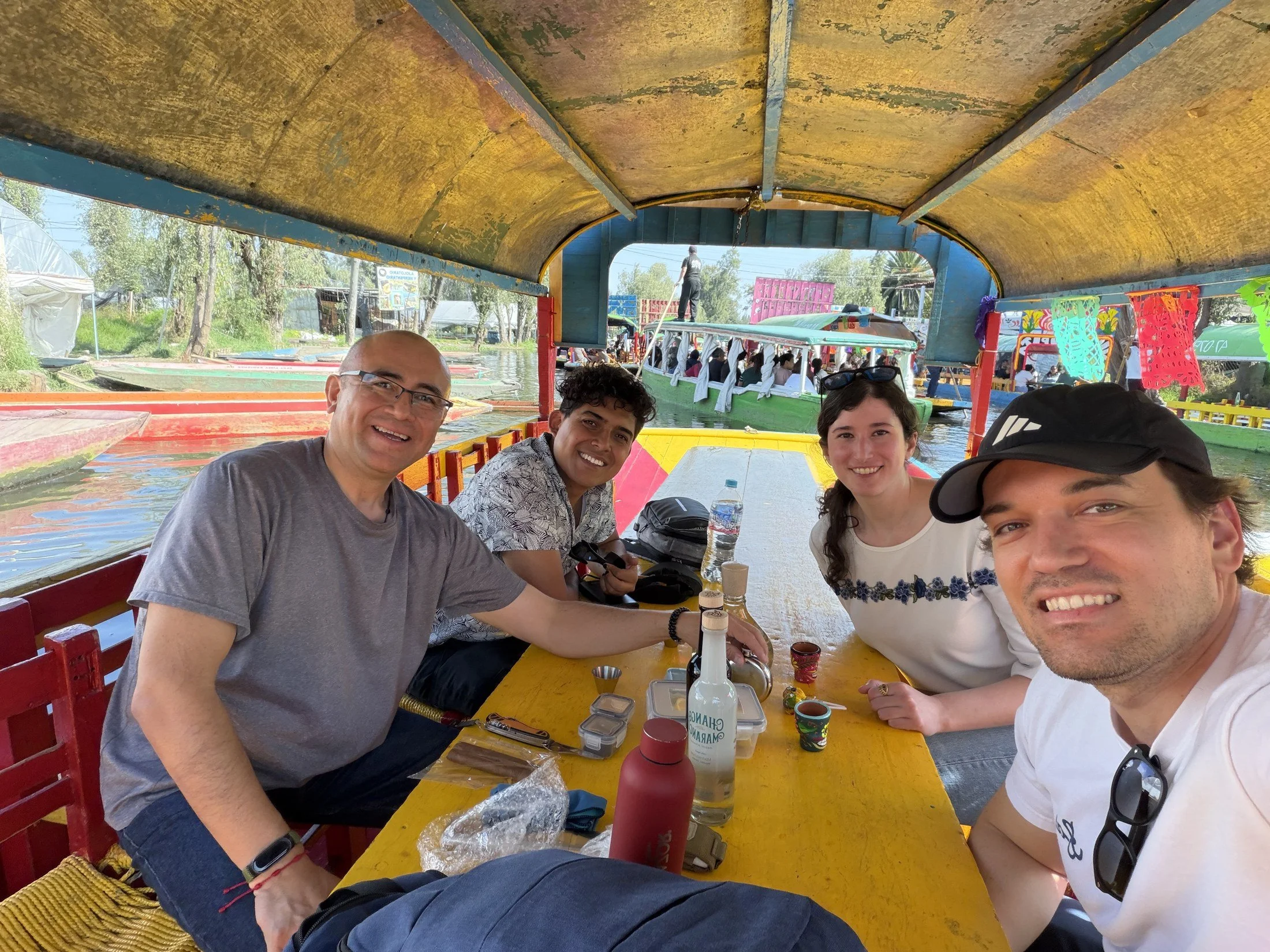
With our guides, Ari and Noe, aboard a trajinera in Xochimilco.
On the return journey, we took a quieter route through the neighborhood canals, passing farms and flower fields far from the lively atmosphere of the main waterways. Xochimilco is also known for its cempasúchil flowers, whose bright orange petals are used to decorate ofrendas and guide the spirits of loved ones home during Día de Muertos. We'd love to return one day for a sunrise ride and breakfast on one of the local chinampas. Some of the ingredients served at Mexico City's most acclaimed restaurants are grown right here.
After our two-hour ride, it was time for lunch. We stopped at a small local food stand, where I had the best enchiladas verdes I've ever tasted. We also tried the mole, which had a lovely balance of sweet and savory flavors. I'd been worried we'd leave Mexico City without eating enchiladas even once, so I was thrilled we finally got to have some.
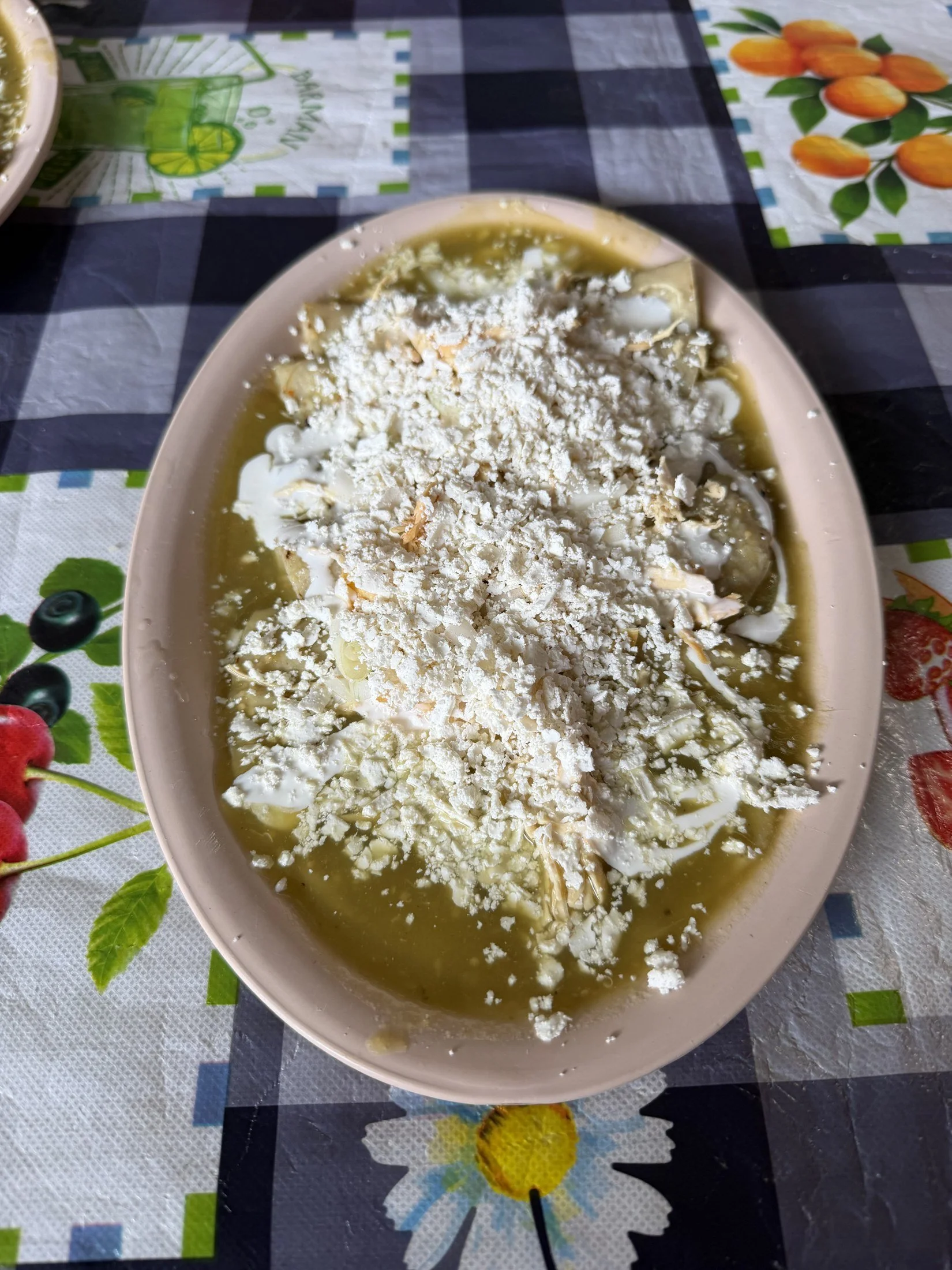
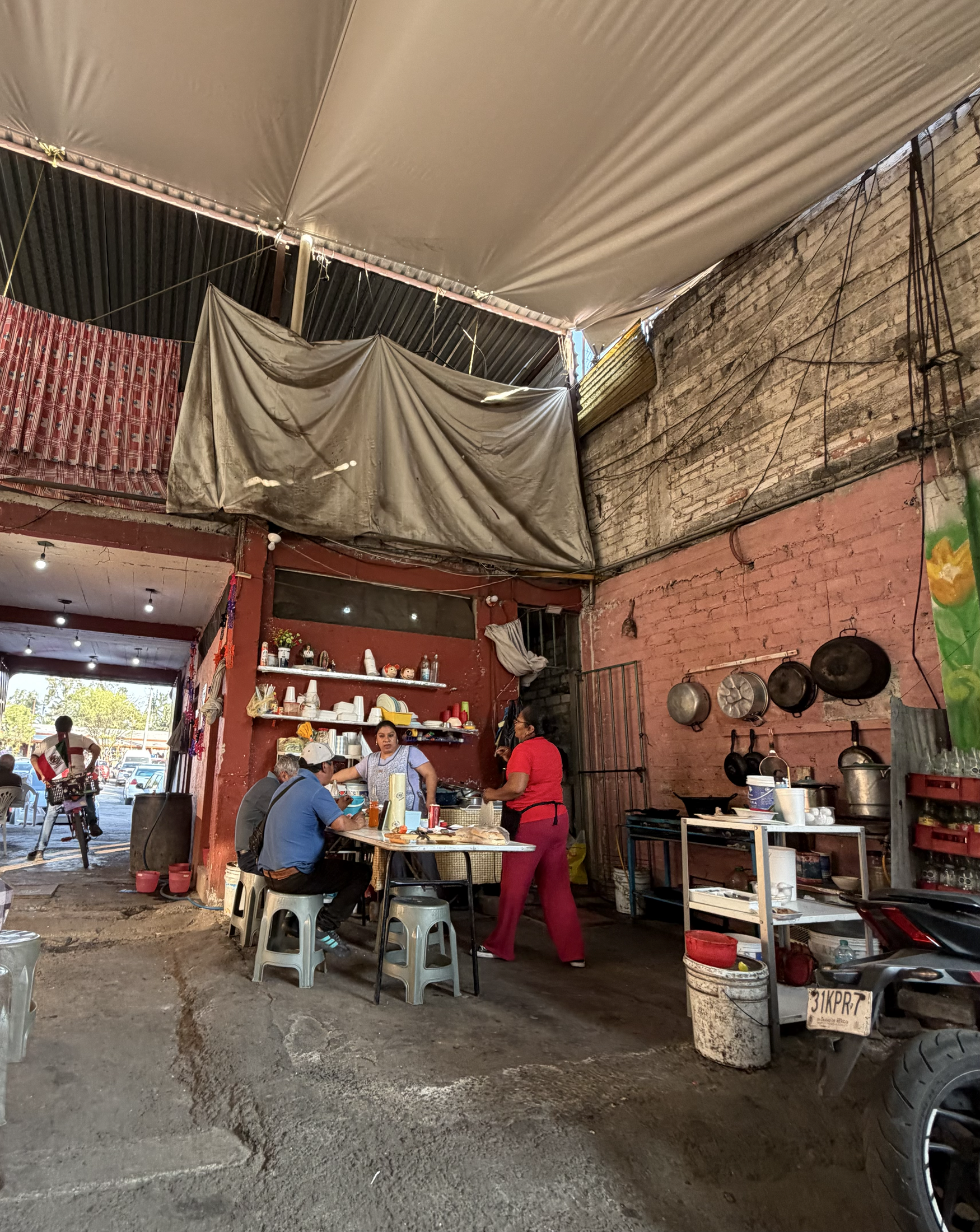
Enchiladas verdes and the little local restaurant where we stopped for lunch.
As we were leaving Xochimilco, we caught a glimpse of the Voladores de Papantla, a traditional Indigenous ceremony dating back to pre-Hispanic times. Four performers descended from a towering pole, suspended by ropes and slowly spinning through the air. One played a flute and another a small drum, while the other two held their poses as they descended. The ritual traditionally honors the connection between nature and the spiritual world. We hadn't expected to see anything like it, and it was a wonderful way to end our time in Xochimilco.
The Voladores de Papantla descending above Xochimilco.
Then it was time for the main event: visiting the cemeteries in San Antonio Tecómitl and San Andrés Mixquic. Our first stop was Tecómitl Cemetery, a much smaller and more intimate setting than Mixquic.
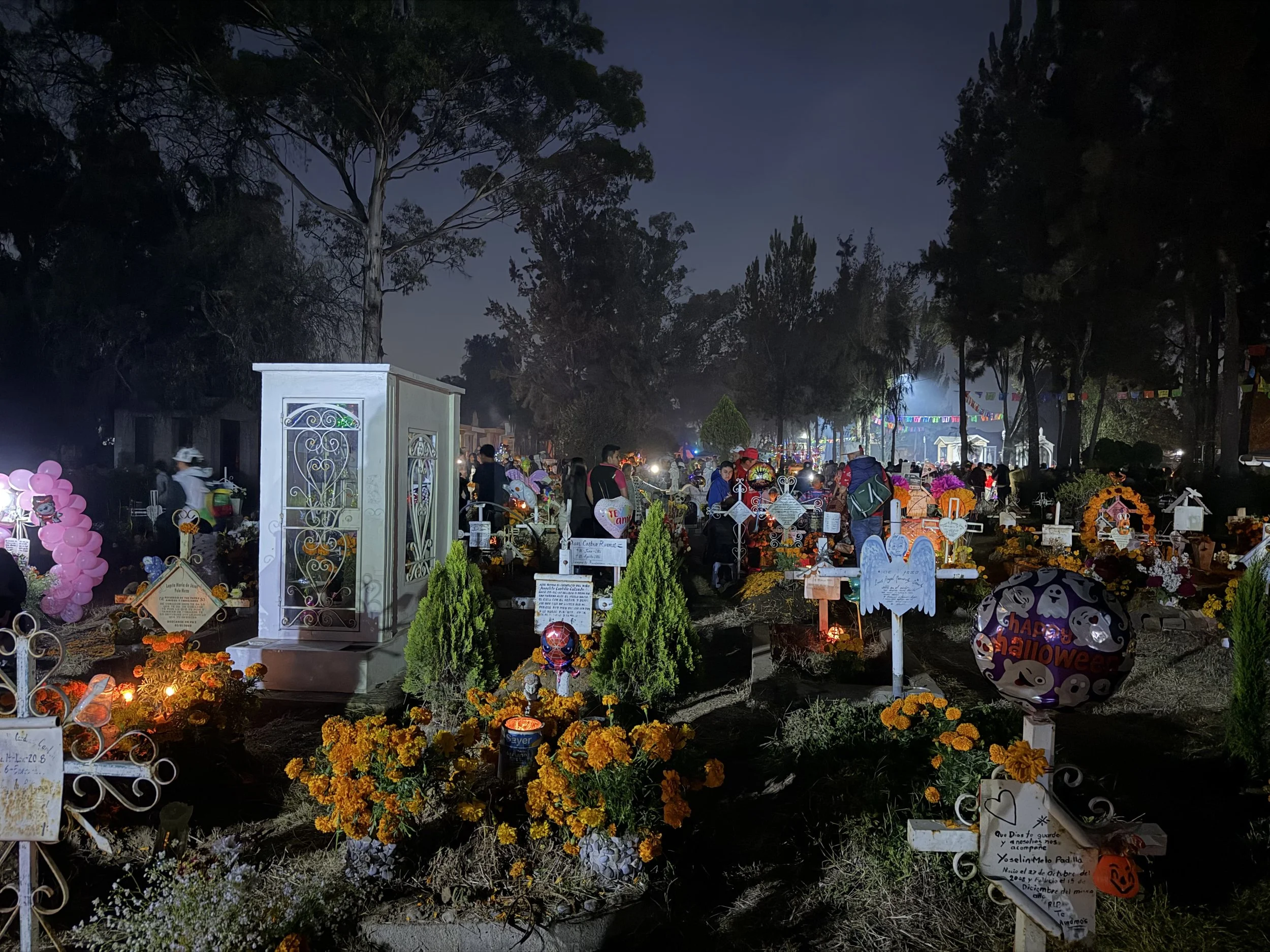
Flowers, candles, and ofrendas at Tecómitl Cemetery.
The strong smell of incense filled the air, and candles illuminated graves decorated with flowers and colorful ofrendas. Families of all generations, from great-grandparents and grandparents to parents and young children, gathered to spend time with one another and honor those who had passed. Some listened to music, others shared stories or meals, while many continued decorating their loved ones' graves.
During Día de Muertos, it is believed that the veil between the living and the dead becomes thinner, allowing the spirits of departed loved ones to return and visit their families. The ofrendas, candles, flowers, and offerings are all part of welcoming them home.
Understanding this gave the gatherings an even deeper meaning. These families weren't only visiting graves to mourn; they were making time to be with their loved ones again.
The cemetery also hosted an ofrenda contest open to the public, giving us the opportunity to admire some incredibly creative and beautiful arrangements.
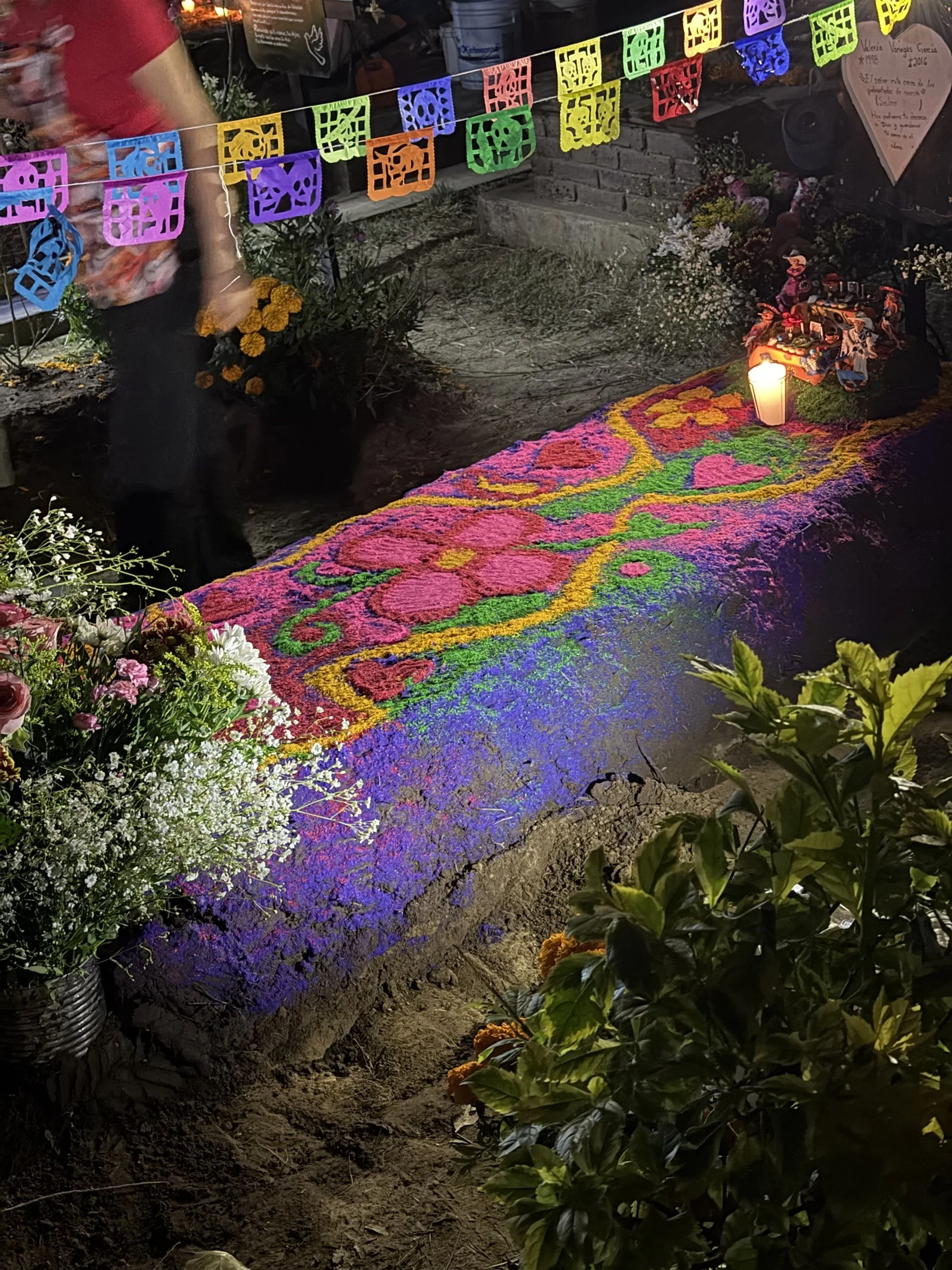
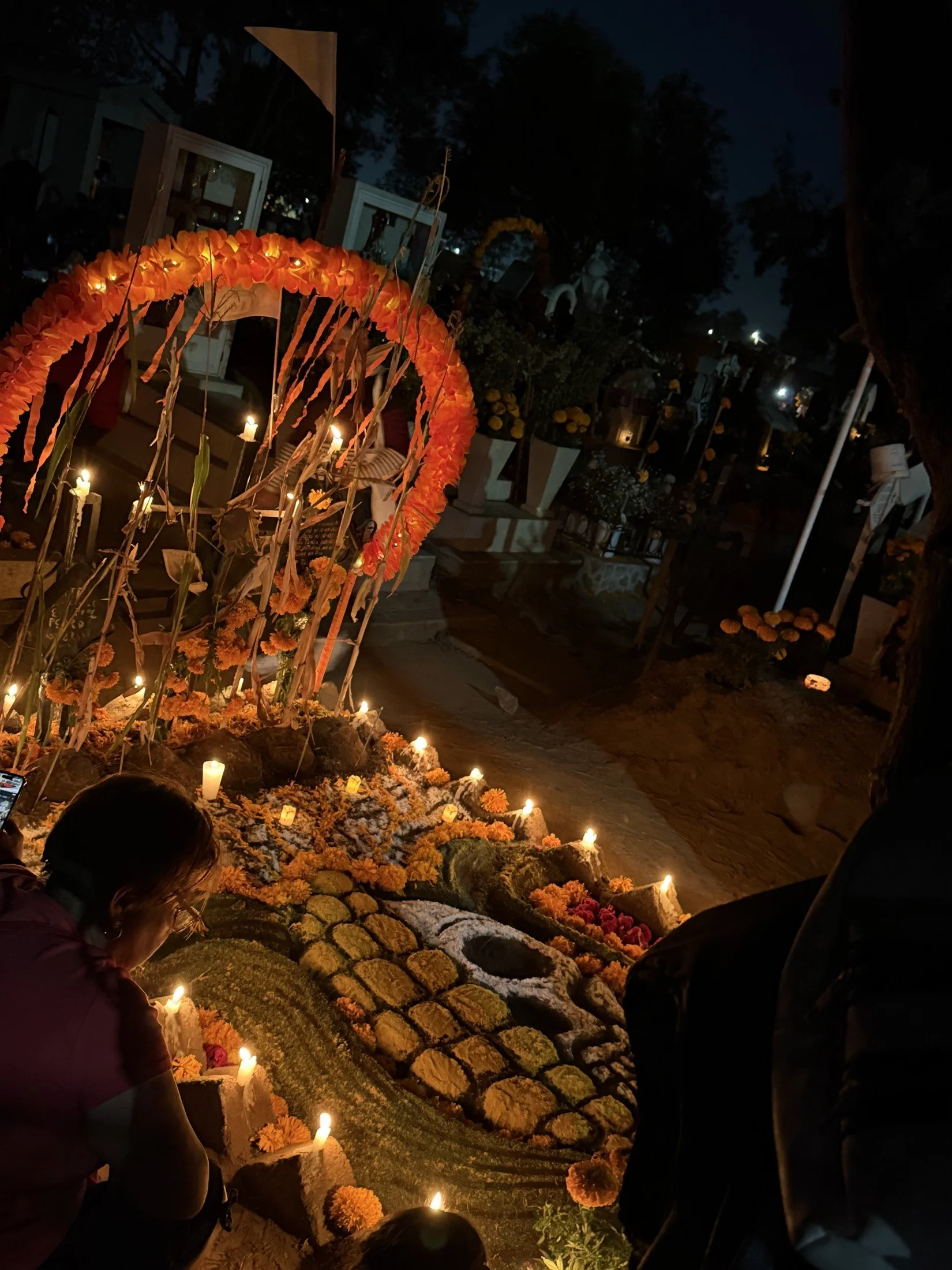
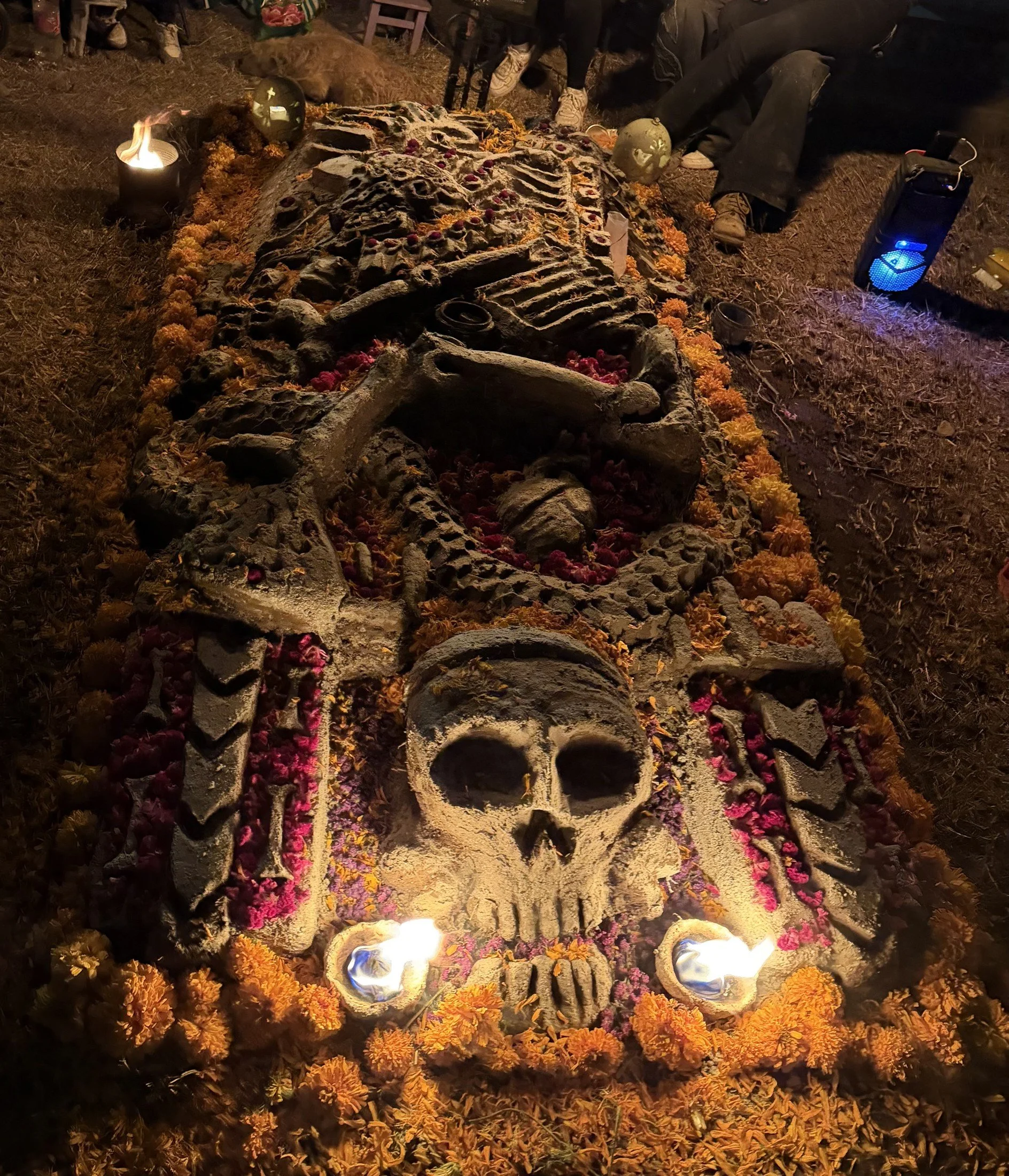
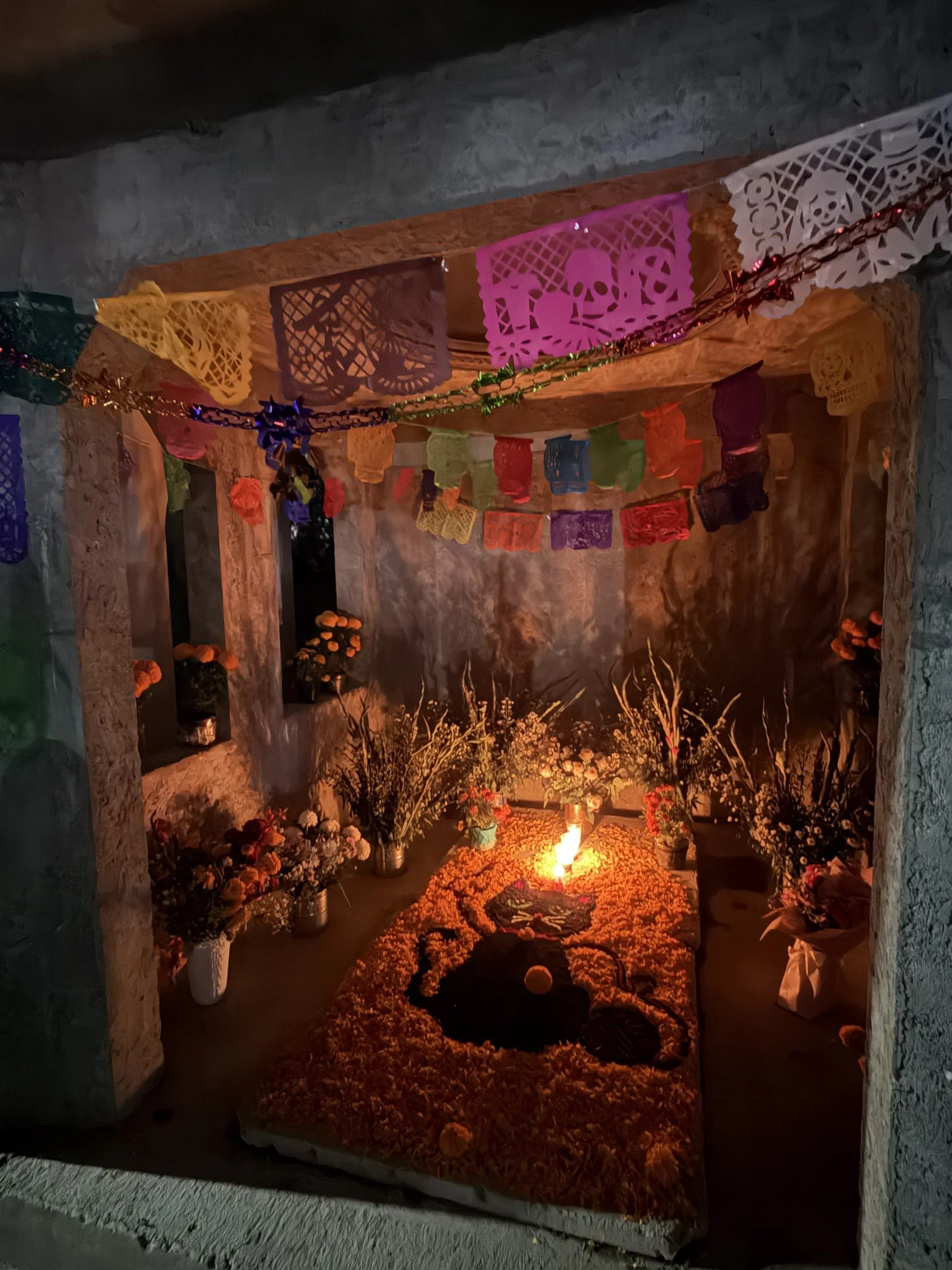
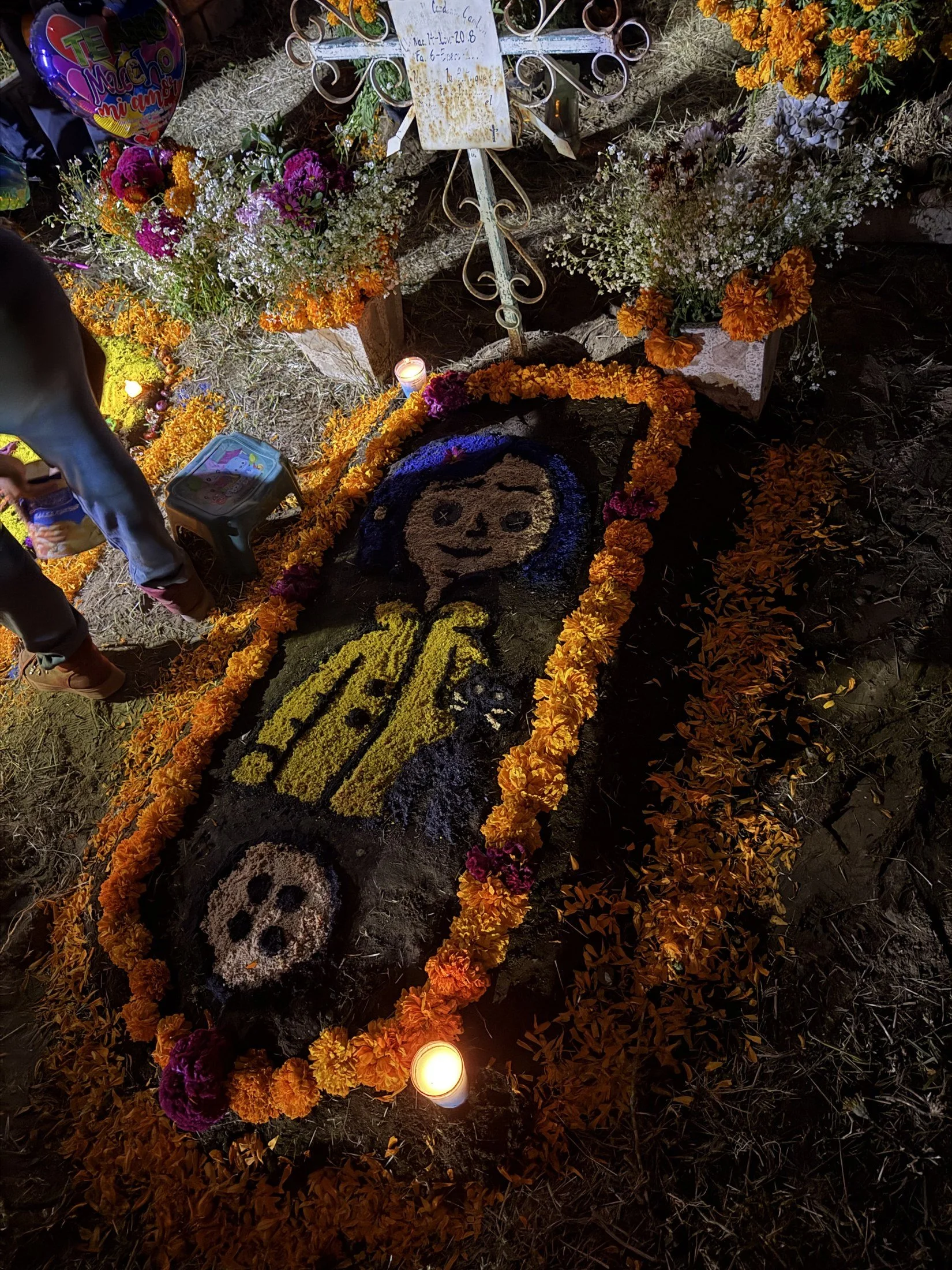
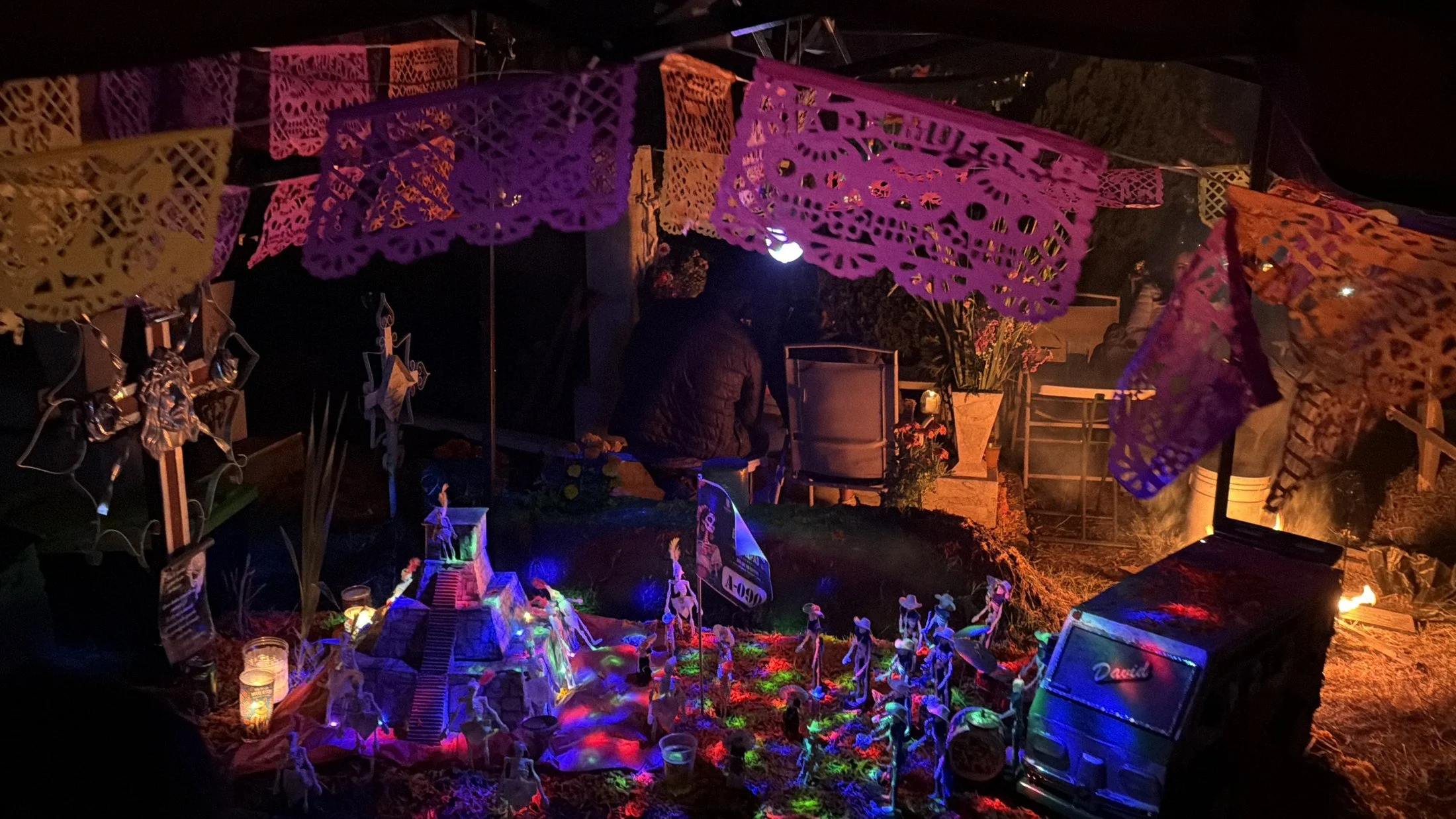
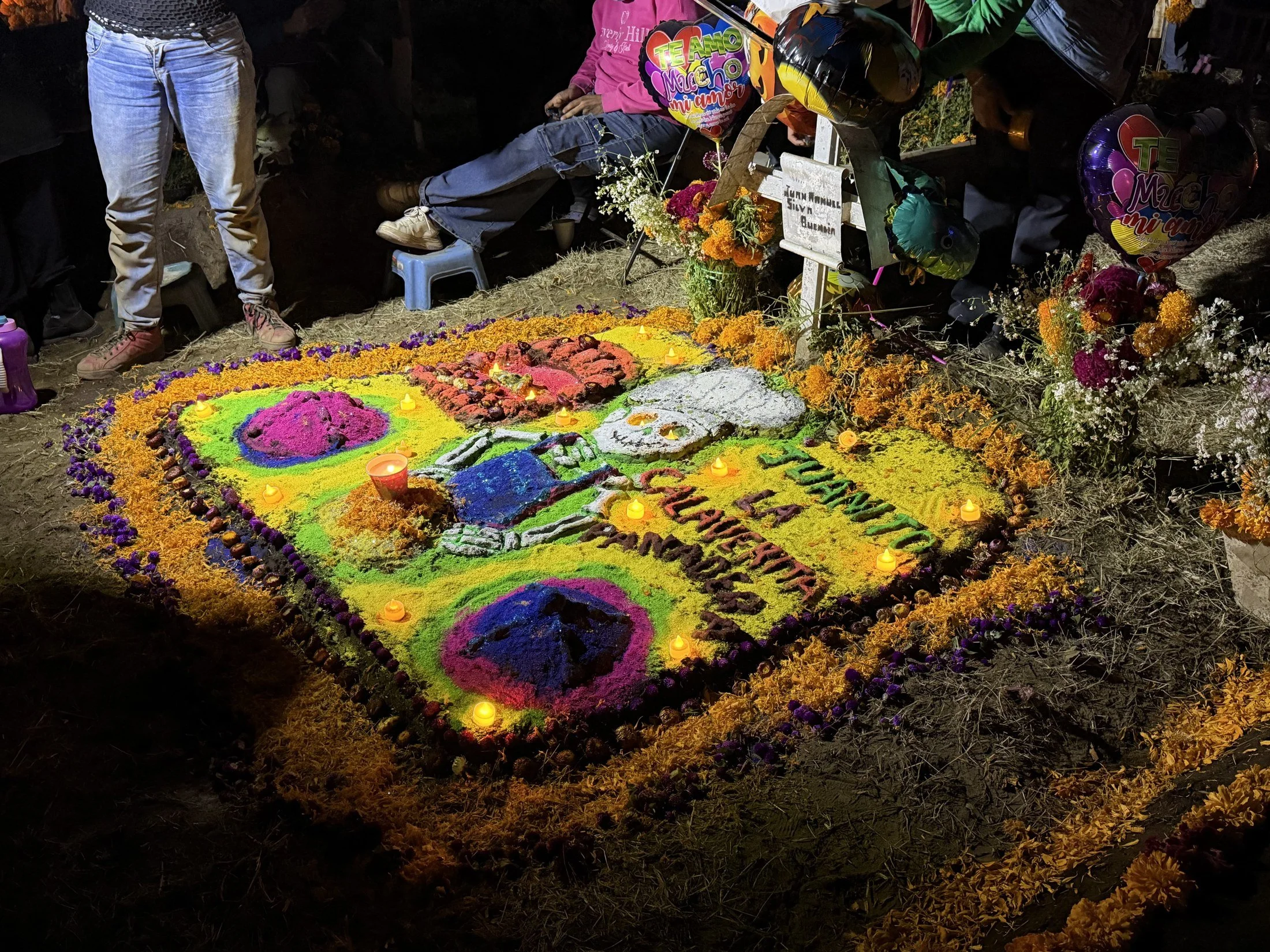
A few of the creative ofrendas entered in the contest at Tecómitl Cemetery.
Some sections of the cemetery were loud and festive, while others were quiet and reflective. There were also areas dedicated to the graves of babies and young children.
Within minutes of walking through Tecómitl, I found myself overwhelmed with emotion; I felt both sadness and joy at the same time.
I kept thinking about how beautiful it was that these families make this commitment every year, dedicating their time and energy to honoring their loved ones together. I noticed how close-knit the families seemed, how they knew the other families around them, and how connected they were to their community. There was a sense of family and togetherness that sometimes feels harder to find in the United States.
As a Latina, I could relate to some of that closeness, but my family doesn't celebrate anything quite like Día de Muertos.
The sadness came from the loss and longing I could sense around me. I thought about the families who had recently lost loved ones and how difficult it must be to miss someone so deeply while gathering at their grave. I saw a couple beside their baby's grave. The dates on the headstone showed that their baby had been born and died on the same day. It was heartbreaking.
The beauty and sadness of it all were a lot to take in, but I felt grateful to be there. Grateful to witness such an intimate tradition, to see the devotion these families had for one another, and to admire the beautiful ofrendas that so much care had gone into creating.
Mixquic was an entirely different experience.
The streets leading to the cemetery were lined with food stalls and vendors selling pan de muerto, flowers, decorations, and all kinds of Mexican street food. We'd seen similar stalls in Tecómitl, but Mixquic had a much larger market.
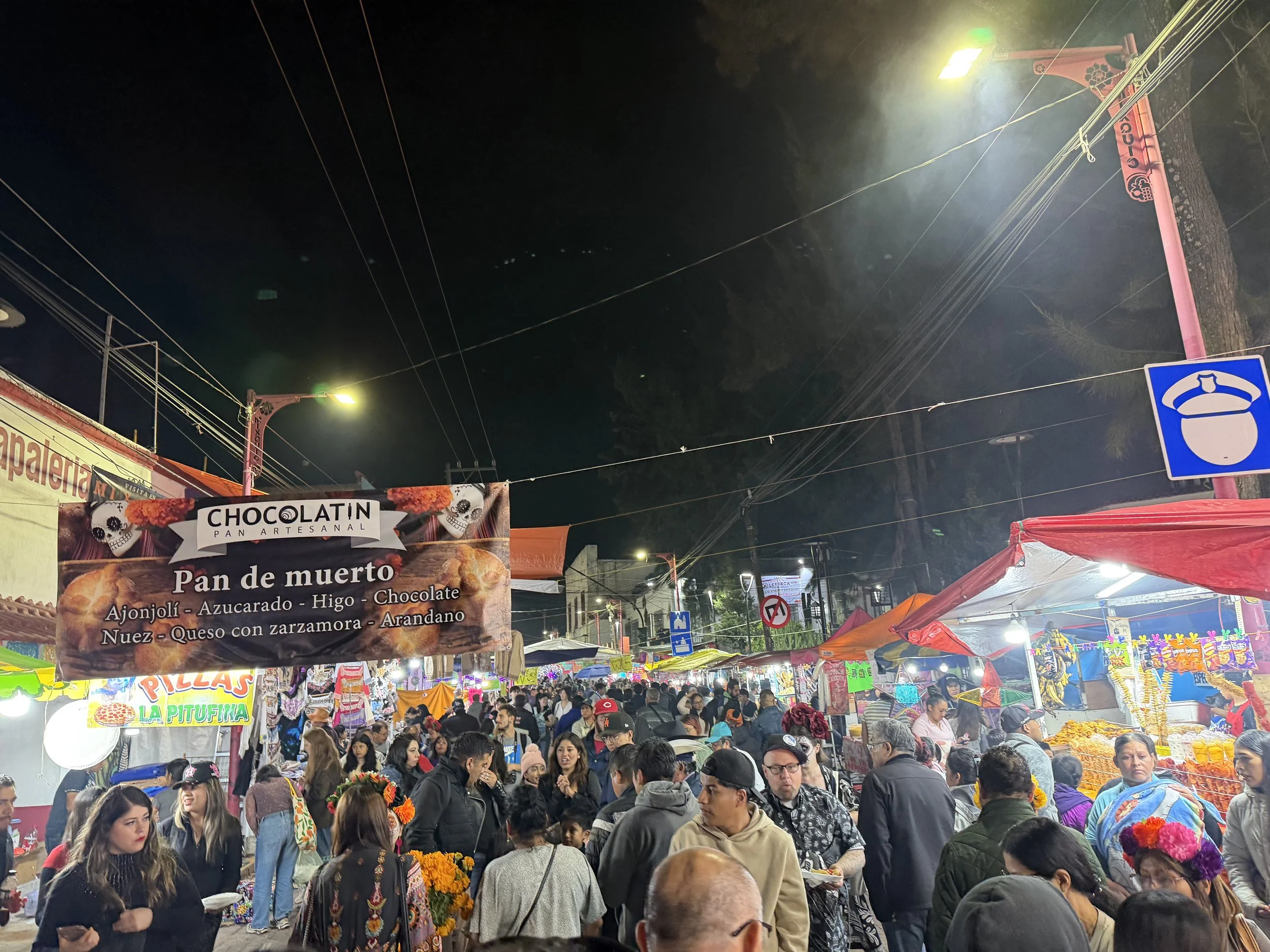
The town's cemetery is said to have been one of the inspirations for Disney's movie Coco, so you can imagine how popular it has become with visitors. Mixquic is also known for its alumbrada, a candlelit vigil on the night of November 2, when thousands of candles illuminate the cemetery. It's one of the most beautiful traditions of Día de Muertos, and I had been looking forward to seeing it for myself.
But the reality of visiting Mixquic was different from what I had imagined. I'd been warned to expect heavy traffic getting in and out, but I hadn't anticipated just how crowded the town and cemetery would be.
I assumed there would be more space to walk. Instead, we found ourselves shoulder to shoulder with hundreds of people, barely able to move. We shuffled forward slowly, often coming to a complete standstill. It was nearly impossible to make our way toward the cemetery, let alone find a moment of personal space.
Entering the crowded cemetery in San Andrés Mixquic on the night of Día de Muertos.
One of the few places where we could escape the crowds was inside the beautiful Church of San Andrés Apóstol, which dates to the 17th century and features ornate gold detailing.
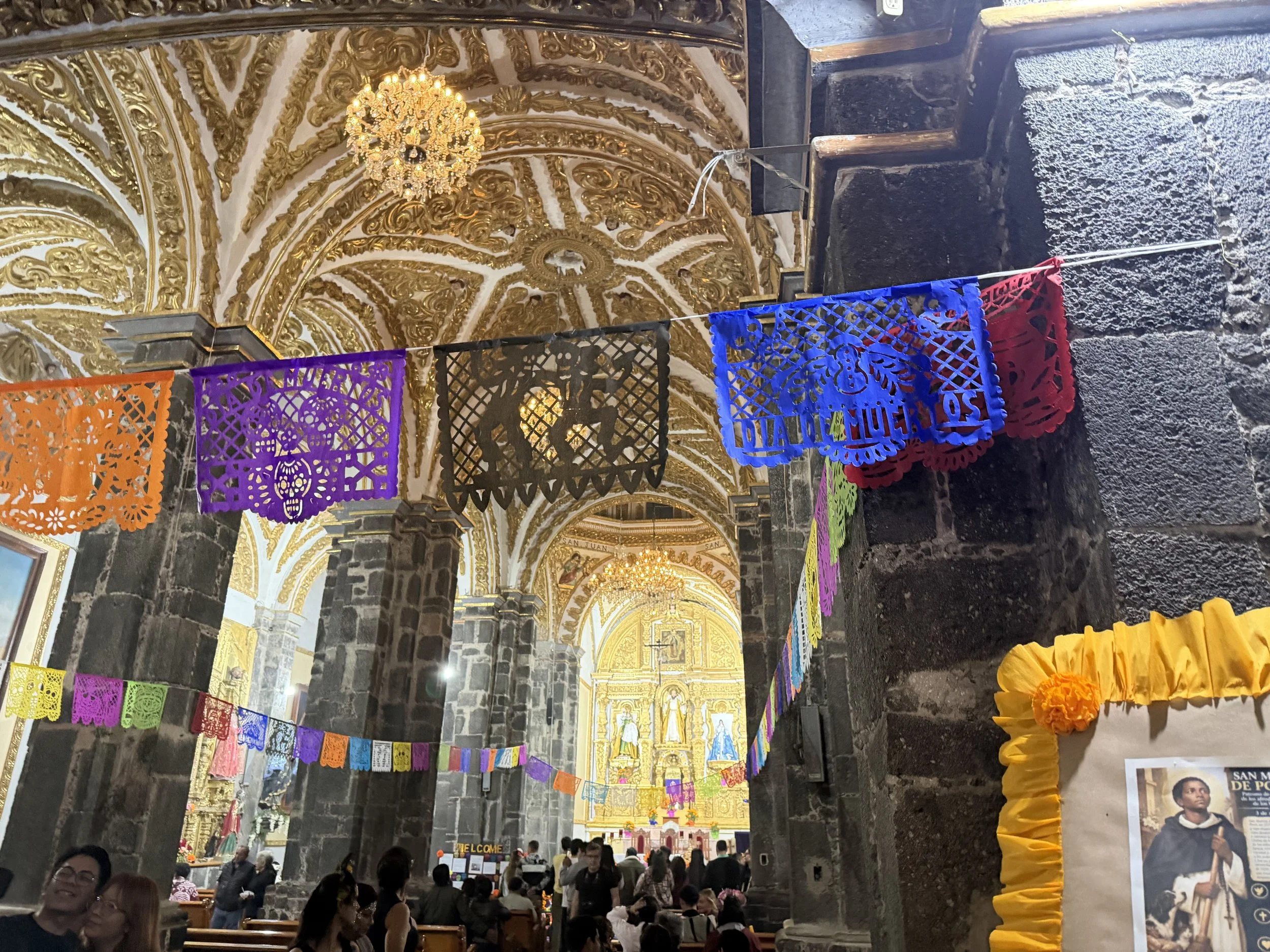
Papel picado beneath the ornate gold ceiling of the Church of San Andrés Apóstol.
I couldn't stop thinking about what this must be like for the locals, especially the families who had come to honor their loved ones and were now surrounded by thousands of visitors. I wondered whether limiting foot traffic or establishing certain visiting hours for tourists might help preserve some of the peace and intimacy of the tradition.
It couldn't have felt more different from Tecómitl, where we'd had the space to observe and reflect.
While I'm glad we had the opportunity to visit Mixquic, I was ready to leave almost as soon as we arrived. The crowds made it difficult to appreciate the traditions in the way I'd hoped. But I also realized that our time in Tecómitl had already given me the experience I'd come looking for.
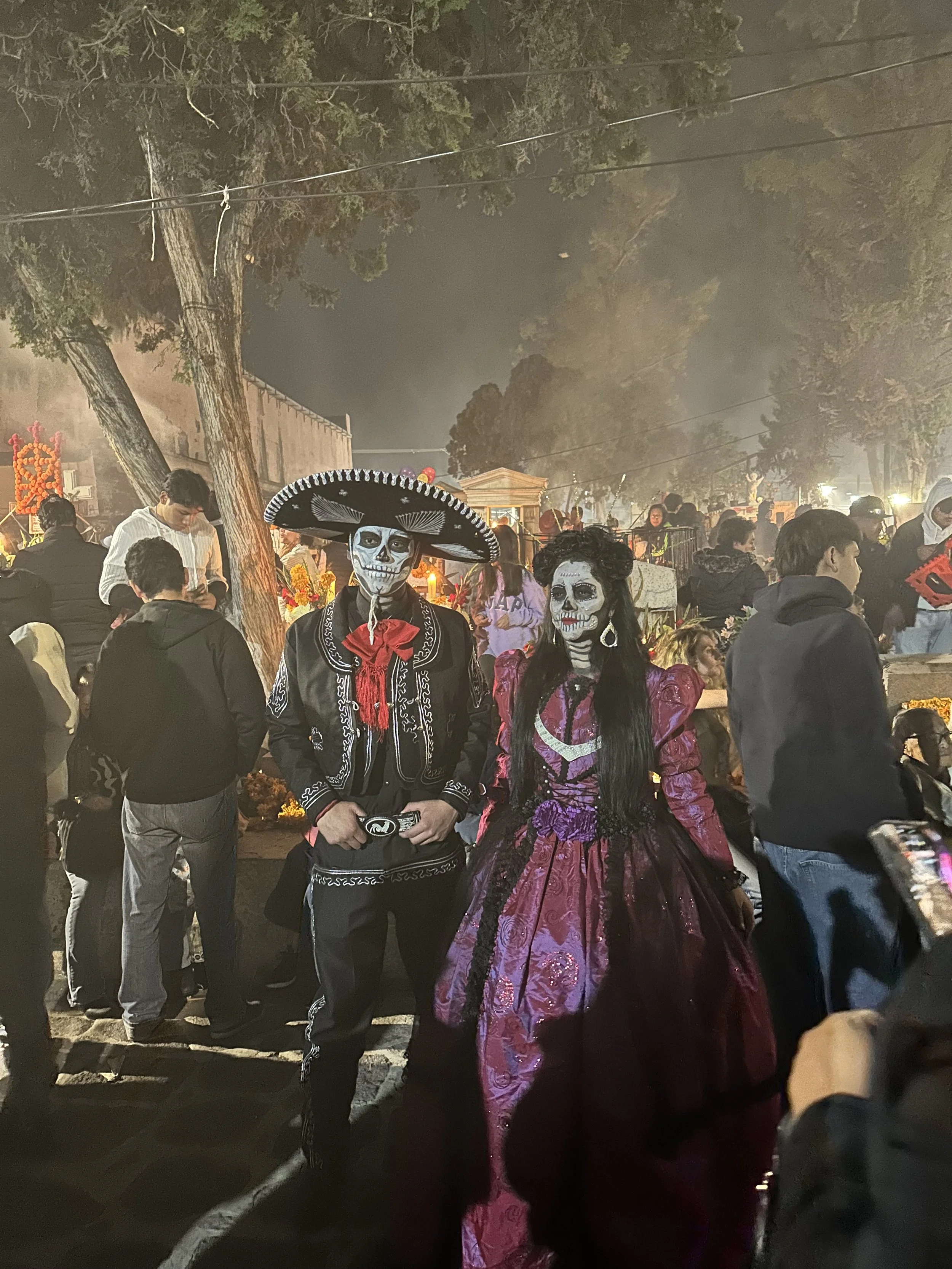
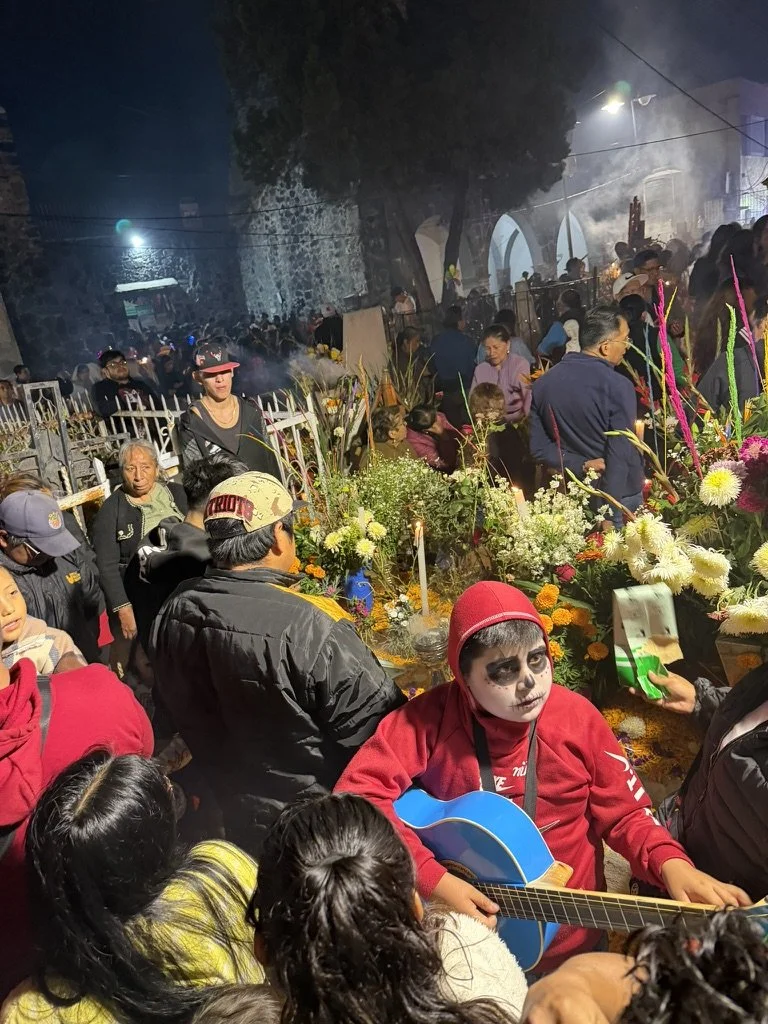
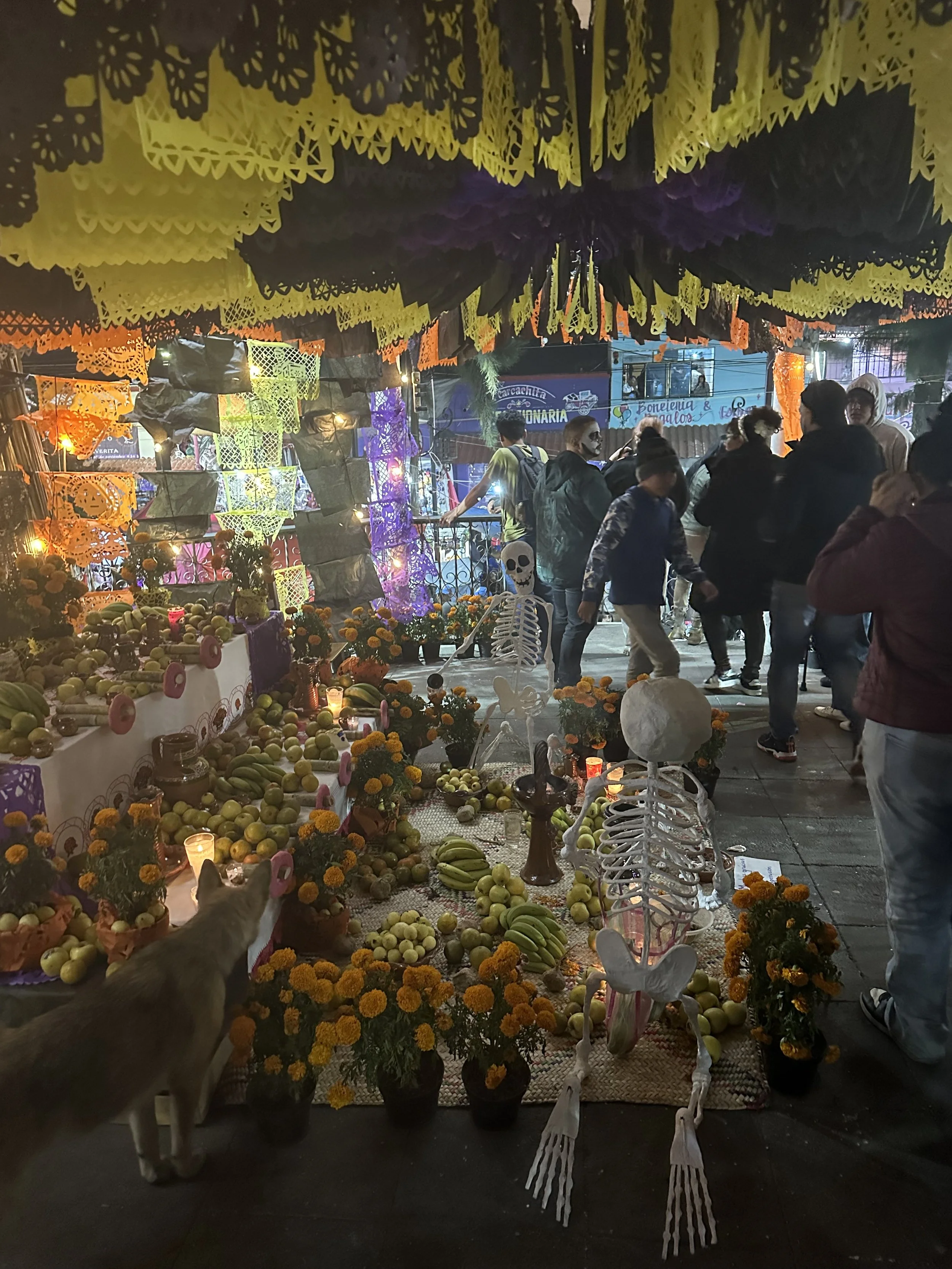
Painted faces, candlelit ofrendas, and streets full of life in San Andrés Mixquic.
One meaningful part of our visit to Mixquic was participating in a community ofrenda hosted in a local family's home.
Before the tour, we had sent photographs of our grandparents and great-grandparents, which were added to the ofrenda alongside photographs of other visitors' family members. Many people had also shared photographs of their pets, who were just as much a part of the family.
It was a thoughtful addition to the day and gave us a chance to take part in the tradition rather than only observe it.
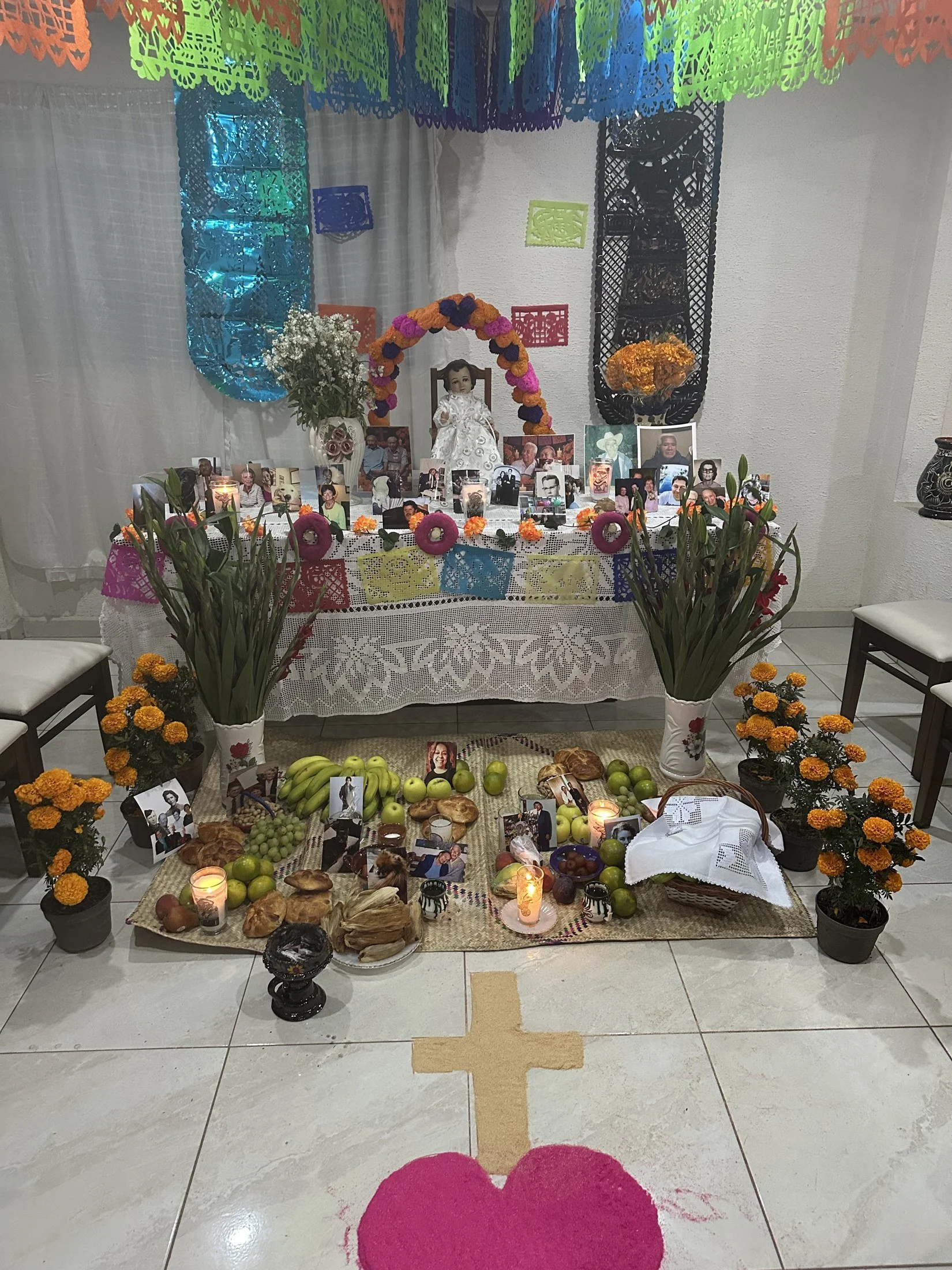
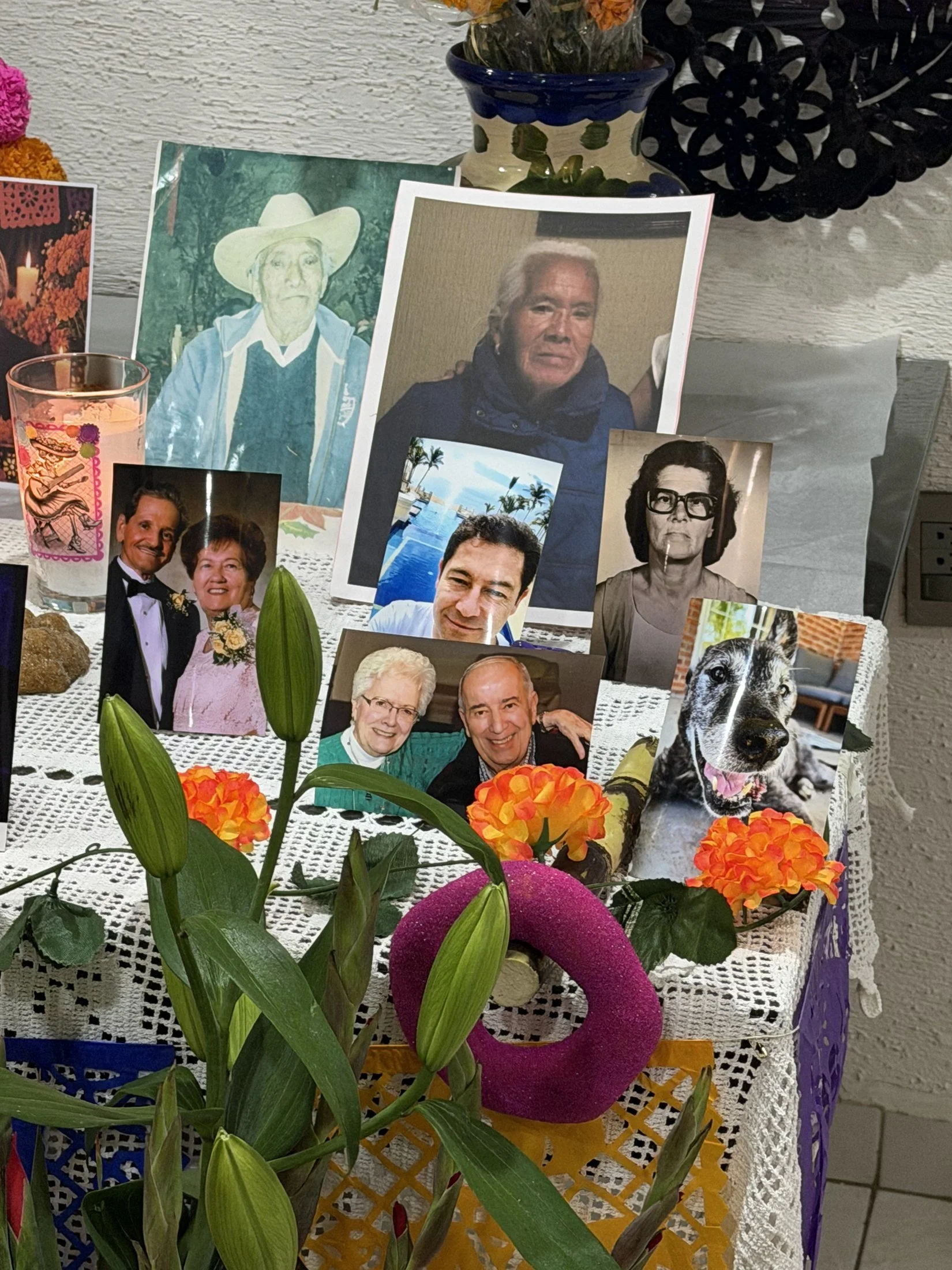
The community ofrenda in Mixquic, with our family’s photographs among the offerings.
As the day came to an end, so did our time in Mexico City. It felt like a powerful way to close an incredible trip.
I left with a deeper understanding of what Día de Muertos means to families in this part of Mexico, but also with a renewed curiosity about my own family history. I found myself wanting to ask my grandparents more questions about the people who came before them. Who were they? What were their lives like? What stories have been passed down, and which ones have been forgotten?
More than anything, the experience gave me a different perspective on what it means to honor the dead and how remembering those we've lost can also bring us closer to the people who are still here.
